

Head Assembly Installation and Operating Guide (Diamond Nozzle and Mixing Tube Connection)
I. Component Introduction
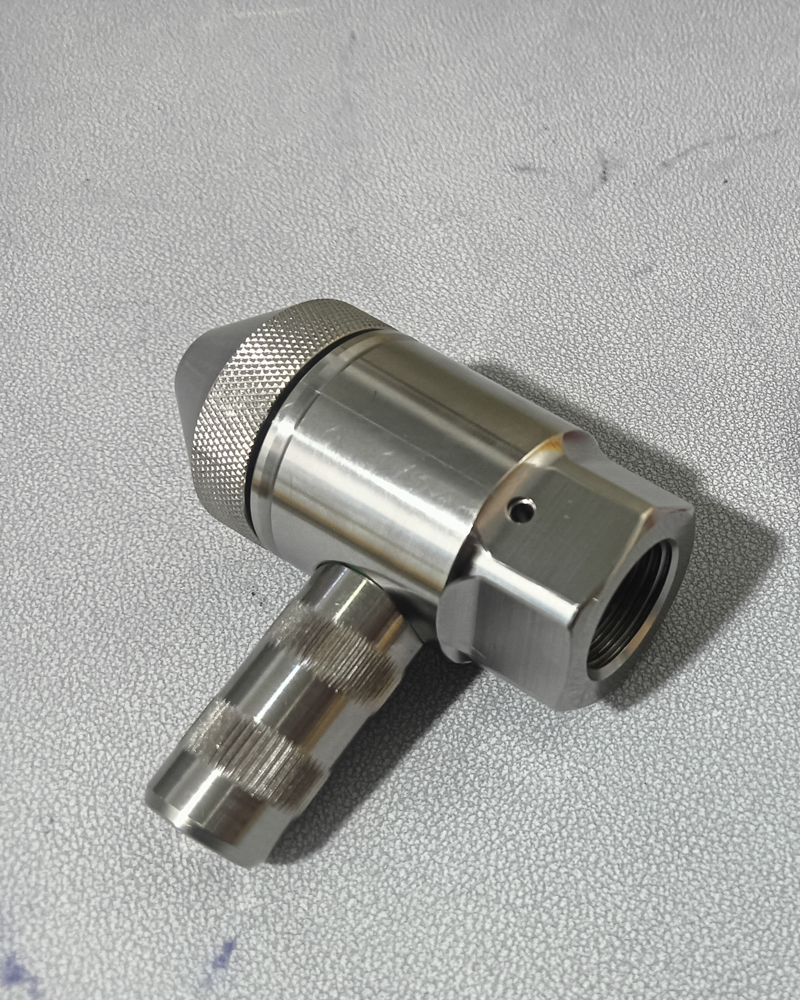
Before starting installation, familiarize yourself with the core components of the head assembly:
Head Assembly Body: The core connecting mechanism, containing internal precision seals.
Diamond Nozzle: Also known as the jewel orifice, the core component made of diamond, used to form the ultra-high-speed water jet.
Mixing Tube: The tube where abrasive and water mix and are accelerated.
Mixing Tube Holder: The key component that connects and secures the mixing tube.
Locking Nut: Used to lock and secure the entire assembly.
Core Connection Relationship: Diamond Nozzle → Head Assembly Body → Mixing Tube Holder → Mixing Tube
II. Installation Steps
Golden Rule: Before performing any operations, ensure the equipment is fully depressurized and the power source is disconnected!
Step 1: Cleaning
Use lint-free wipes and high-purity alcohol to thoroughly clean the following parts:
The conical sealing surface inside the head assembly body that contacts the diamond nozzle.
The entire external surface of the new diamond nozzle, especially the conical sealing area.
The internal threads and end face of the mixing tube holder.
The external threads and insertion end of the mixing tube.
Any tiny impurities can cause high-pressure leaks and permanent damage to components.
Step 2: Install Diamond Nozzle
Gently place the conical end of the Diamond Nozzle into the conical seat of the head assembly body by hand.
Ensure the nozzle settles naturally and smoothly into the base without any tilting or binding.
Note: Do not use the locking nut at this stage; finger tightness is sufficient to check alignment.
Step 3: Connect Mixing Tube and Holder
Hand-tighten the Mixing Tube into the Mixing Tube Holder.
Screw it in until the top of the mixing tube contacts the internal step of the holder - it should feel snug. Avoid excessive force to prevent damaging the threads.
Step 4: Overall Assembly and Alignment
Carefully slide the pre-assembled mixing tube and holder combination over the already installed diamond nozzle.
Hand-tighten the mixing tube holder onto the head assembly body. This process should feel smooth.
When the holder contacts the diamond nozzle, you will feel slight resistance. At this point, gently back off the mixing tube holder by about 1/8 of a turn. This allows for minor self-alignment between the diamond nozzle and the mixing tube.
Step 5: Tighten Locking Nut
Hand-tighten the Locking Nut onto the mixing tube holder.
Using the dedicated wrench, tighten the locking nut. The tightening torque should be moderate - typically until firmly snug. Do not use cheater bars or excessive force. The clamping force from the locking nut is transmitted through the holder, finally securing the diamond nozzle and mixing tube in their aligned positions.
III. Alignment Check (Critical Step)
After installation, an alignment check is mandatory to ensure the water jet from the diamond nozzle passes precisely through the center of the mixing tube.
Low-Pressure Water Test: Start the high-pressure pump and jet pure water at low pressure (e.g., below 50 MPa) without turning on the abrasive valve.
Observe the Jet Stream:
Ideal Condition: The stream is a concentrated, transparent, straight water column with a crisp sound.
Poor Condition: The stream is dispersed, non-transparent, fan-shaped, or noticeably curved.
Assessment and Action:
If the stream is good, proceed with normal cutting.
If the stream is dispersed, it indicates misalignment between the diamond nozzle and mixing tube. Immediately shut down the high-pressure pump, depressurize, and restart the fine-tuning installation from Step 4. Slightly backing off and re-tightening the locking nut often resolves alignment issues.
V. Maintenance and Care
Regular Inspection: Check all connection points for signs of loosening before starting up each day.
Regular Replacement: Diamond nozzles and mixing tubes are consumables. Replace them periodically based on actual usage time and cutting quality. Replacing them simultaneously is recommended for optimal performance.
Keep Clean: Always keep the head assembly components clean. Use protective caps when not in use.
Proper Storage: Store disassembled precision components in dedicated cases to avoid impact.
Summary: Successful installation relies on "Cleanliness, Alignment, Appropriate Tightening." Following this guide will ensure your KMT head assembly delivers optimal performance, extended service life, and high-quality cutting results.
If you are interested,click here